
How SMEs Can Build a Referral Program That Consistently Brings In New Customers 🗣️
Est. read time: 3 mins
We chanced upon an interesting Reddit thread today: https://www.reddit.com/r/smeSingapore/s/wIOp5DiMQo
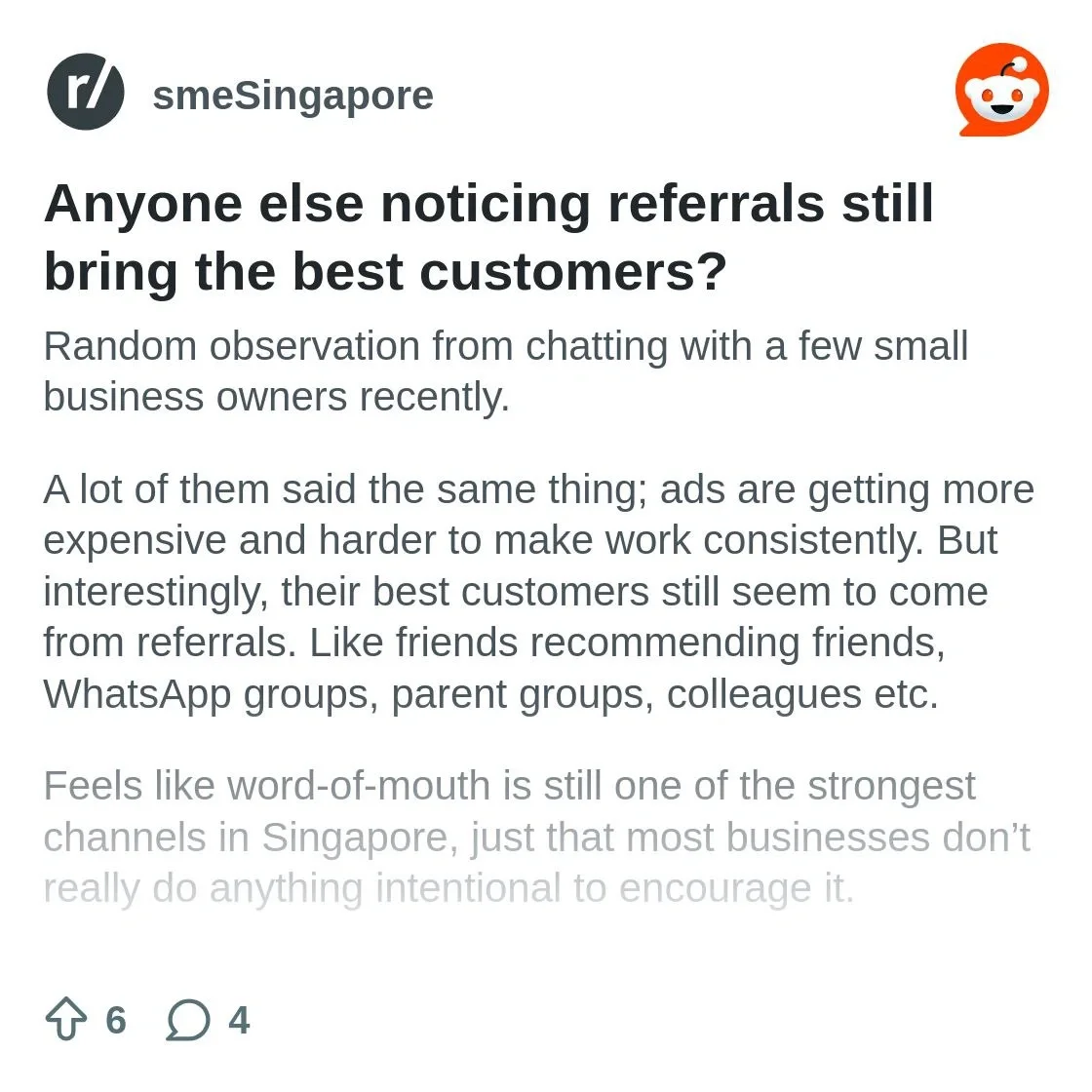
Image credits: Reddit
According to the thread, referrals bring some of the best customers to SMEs. ✨
Customers who are interested…who buy more, and stay longer.
But many SMEs don’t do anything intentional to encourage it currently.
Indeed, referrals bring some of the best customers to businesses.
Why?
Because people trust recommendations from friends far more than ads.
According to Nielsen, 92% of consumers trust recommendations from people they know over any other form of marketing.
The challenge is that referrals often happen randomly, rather than consistently.
The solution is simple: build a structured referral program that incentivises customers to actively bring in new business.
Here are 5 proven strategies SMEs can use to generate referrals consistently. ✅
1. Use Double-Sided Referral Rewards 🏆
One of the most effective referral structures is the double-sided reward.
Both the person making the referral and the new customer receives a reward.
For example:
Your customer refers a friend
The friend receives $50 off their first purchase
The referrer receives $50 in credit
This works because people feel more comfortable referring when their friend also benefits from the introduction.
Several well-known companies successfully used this strategy to scale rapidly:
Dropbox offered extra storage space to both users who referred friends.
Uber rewarded both riders with ride credits.
Airbnb used travel credits for both referrer and guest.
These simple incentives helped turn customers into powerful growth engines.
2. Introduce Tiered Referral Rewards 🪜
Many SMEs reward only the first referral.
But the most effective programs reward multiple referrals.
For example:
1 referral → $30 credit
3 referrals → $100 credit
5 referrals → Free service
10 referrals → VIP upgrade
This structure introduces a gamification effect, encouraging customers to continue referring others.
Fitness studios, tuition centres, and aesthetic clinics frequently use tiered referral rewards to create a steady stream of new clients.
3. Offer Exclusive Insider Benefits 🌟
Referral rewards do not always have to be cash.
In many cases, status and exclusivity are even more powerful incentives.
Businesses can create a small group of “VIP ambassadors” who receive special privileges when they bring in referrals.
Examples of perks may include:
Priority booking
Early access to promotions
Exclusive discounts
Complimentary upgrades
This approach works particularly well for premium or lifestyle brands, where recognition and exclusivity matter.
4. Provide Cash Or Commission Rewards For High-Ticket Services 💲
For high-ticket services, a direct cash reward can be extremely effective.
For example:
A $200 referral reward for a $3,000 service
A $500 referral reward for a $10,000 service
This approach is commonly used by:
Property agents
Renovation firms
Financial advisors
Interior designers
Because the transaction value is high, offering a meaningful reward makes referrals much more attractive, while still being affordable for the firm.
5. Make Referrals Easy To Share (Super Important) 🤗
Even the best referral program will fail if it is too complicated.
The most successful businesses make referrals quick and effortless by providing:
Referral links
QR codes
One-click WhatsApp sharing
Social media share buttons
Tools like referral links allow customers to recommend your business within seconds, dramatically increasing participation.
What Makes Referral Programs Work 💙
Regardless of structure, successful referral programs usually follow four key principles:
1. Keep it simple
Customers should immediately understand how the program works.
2. Offer meaningful rewards
A common rule is to offer incentives worth 10–20% of the customer value.
3. Trigger referrals at the right moment
The best time to ask for referrals is immediately after a positive purchase or service experience.
4. Automate the process
Referral links, automated emails and thank-you pages can prompt referrals without additional effort.
Turning Customers Into A Growth Engine 🏎️💨
When designed well, referral programs can become one of the highest-ROI marketing channels for SMEs.
Instead of constantly spending on advertising, businesses can leverage their existing satisfied customers to generate new leads and sales.
With the right incentives and a simple system, referrals can evolve from occasional word-of-mouth into a consistent and scalable growth channel.
What did you think about our analysis? Let us know your comments below!
